
The useful question is not simply what design costs. It is what level of resolution, coordination and completion the project requires.
Start with the total project, not a decorating allowance
A full-service interior is not one line item. It is an interconnected project made up of professional design, construction or renovation work, furnishings, custom fabrication, freight, receiving and installation. Comparing only a designer’s fee can therefore be misleading. A lower fee attached to a loosely defined scope may leave the client managing drawings, vendor communication, purchasing and installation. A more complete engagement may cost more professionally while reducing gaps, rework and expensive late decisions.
At BN2, we begin with scope because scope controls the investment. Are we furnishing a completed condominium, renovating a kitchen and primary suite, or shaping a new residence from the architectural plan onward? Will the home require custom millwork, art placement, window treatments and a turnkey installation? The same square footage can produce very different budgets depending on the answer.
How professional design fees are structured
Interior studios may use a fixed fee, an hourly fee, a percentage-based fee, a room fee or a combination. None is automatically better. A fixed fee offers predictability when the scope and deliverables are clear. Hourly billing can suit advisory work or evolving conditions. Percentage structures can follow construction cost or purchasing volume. Hybrid agreements often separate design development from procurement and site services.
The proposal should explain what the fee actually buys: measured plans, furniture layouts, finish palettes, elevations, cabinetry development, lighting coordination, presentations, revisions, specifications, meetings and installation oversight. It should also identify exclusions. Permit drawings, structural engineering, architecture, contractor pricing and specialty consultants are separate professional responsibilities unless explicitly included.
The room-by-room variables that move a budget
Kitchens and bathrooms carry dense investment because many decisions occupy a small footprint: cabinetry, stone, plumbing, lighting, appliances, tile and skilled installation. Living rooms may be construction-light but furnishing-heavy. A large custom sectional, handmade rug, architectural lighting and motorized drapery can outweigh the finish budget of a simpler room. Bedrooms are often more predictable until custom wardrobes, upholstered walls or integrated lighting enter the scope.
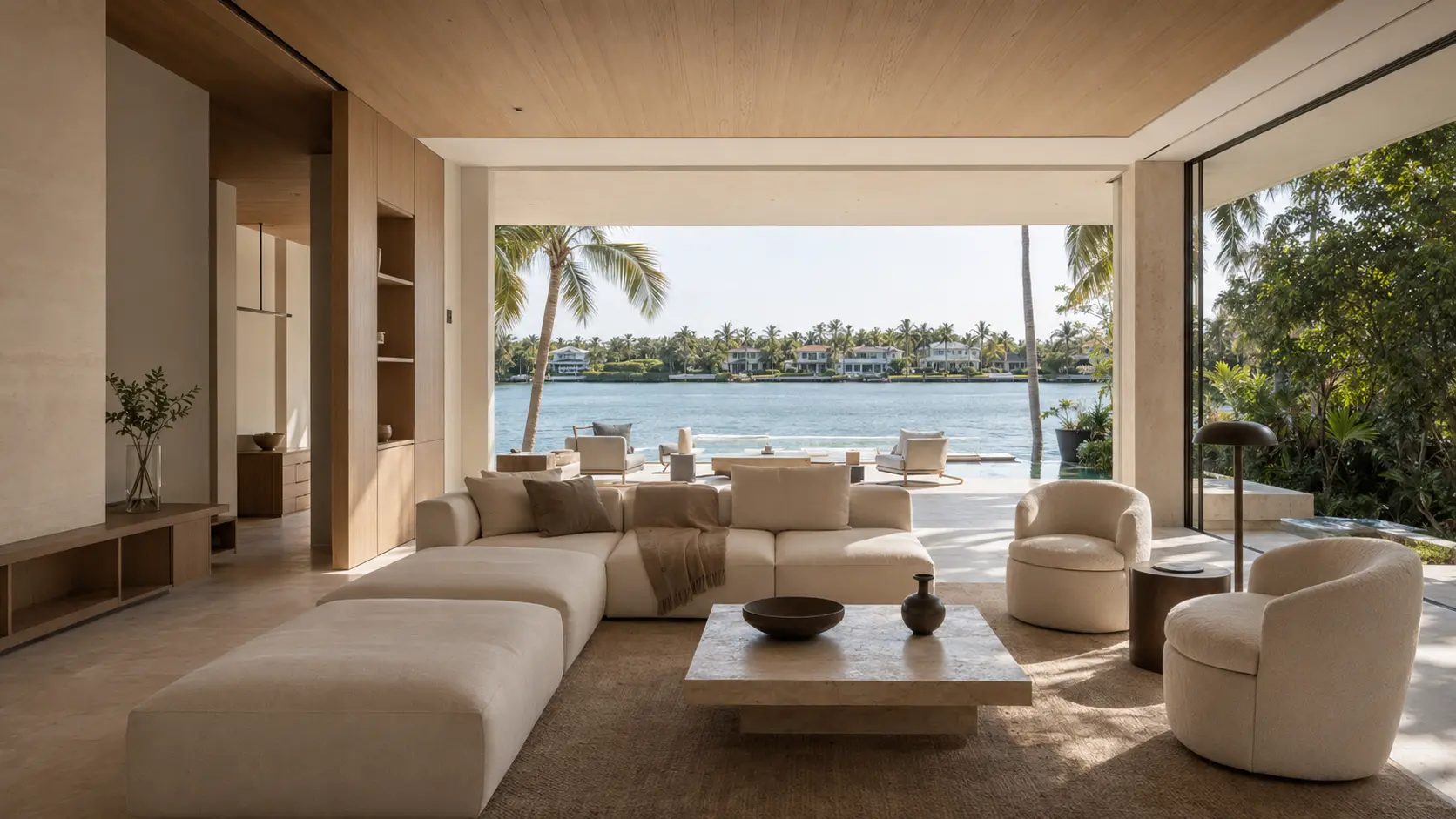
Existing conditions matter equally. A condominium with strict delivery windows, elevator protection and limited staging has different logistics from a house with direct access. Waterfront properties may need materials selected for intense light, humidity and indoor-outdoor use. Renovations reveal conditions after demolition. A responsible budget holds contingency for what cannot be confirmed at the beginning.
| Investment area | What it commonly includes | What changes it |
|---|---|---|
| Professional design | Planning, creative direction, specifications, documentation and coordination | Scope, square footage, complexity and project duration |
| Construction and trades | Demolition, labor, installation and site work | Existing conditions, detailing, access and schedule |
| Furnishings and custom work | Furniture, lighting, rugs, window treatments, art and bespoke pieces | Maker, material, lead time, scale and customization |
| Procurement and installation | Ordering, tracking, receiving, delivery, placement and styling | Item count, storage, freight and installation complexity |
Furnishings: where quality and longevity become visible
Furniture budgets vary because pieces that look similar online may be fundamentally different. Frame construction, cushion composition, textile performance, stone thickness, veneer matching and finish quality affect comfort and life span. Custom work adds value when it solves an unusual dimension, creates architectural continuity or gives the home a distinctive gesture. It is less useful when customization is pursued without a functional or visual reason.
BN2 typically recommends concentrating investment where the body and eye return every day: primary seating, dining chairs, beds, task lighting and major case pieces. Secondary objects can then create rhythm without competing. This high-low discipline is more sophisticated than distributing the same spend across every selection.
Procurement is a service, not a shipping charge
A finished interior can involve hundreds of individual components. Procurement includes confirming specifications, issuing orders, monitoring acknowledgements, tracking lead times, resolving damage or shortages, coordinating receiving and sequencing delivery. A receiving warehouse inspects and stores pieces until the site is ready. Installation brings the complete composition together in a controlled window.
Clients sometimes ask whether direct purchasing will save money. It can reduce one visible service charge, but it also transfers risk and administration to the homeowner. The right choice depends on appetite for order management, claims, storage and site coordination. For turnkey projects, professional procurement protects the design intent and creates a much calmer completion experience.
A better way to establish the budget
First, define the non-negotiable result: which rooms must be complete, what construction is necessary and what existing pieces will remain. Second, create separate allowances for professional services, construction, furnishings, freight and contingency. Third, test the allowance against a few representative selections before approving the full direction. A kitchen appliance package, a primary sofa and a custom vanity can quickly reveal whether expectations and budget align.
Finally, preserve a decision reserve. Projects become unnecessarily expensive when every allowance is spent before the design is resolved. A reserve allows the team to respond to a compelling material, a site condition or an object that meaningfully elevates the home.
What a useful first conversation should accomplish
A consultation should not promise a universal price per square foot. It should clarify the property, timeline, decision makers, desired level of service and approximate investment comfort. From there, the studio can recommend a scope and prepare a proposal tied to actual deliverables.
BN2’s point of view is simple: transparency begins before selections. A client should understand where the money goes, which decisions carry the greatest consequence and how the team will protect continuity. Full-service design is valuable when it turns many fragmented expenditures into one coherent home—and gives the client a process they can trust.